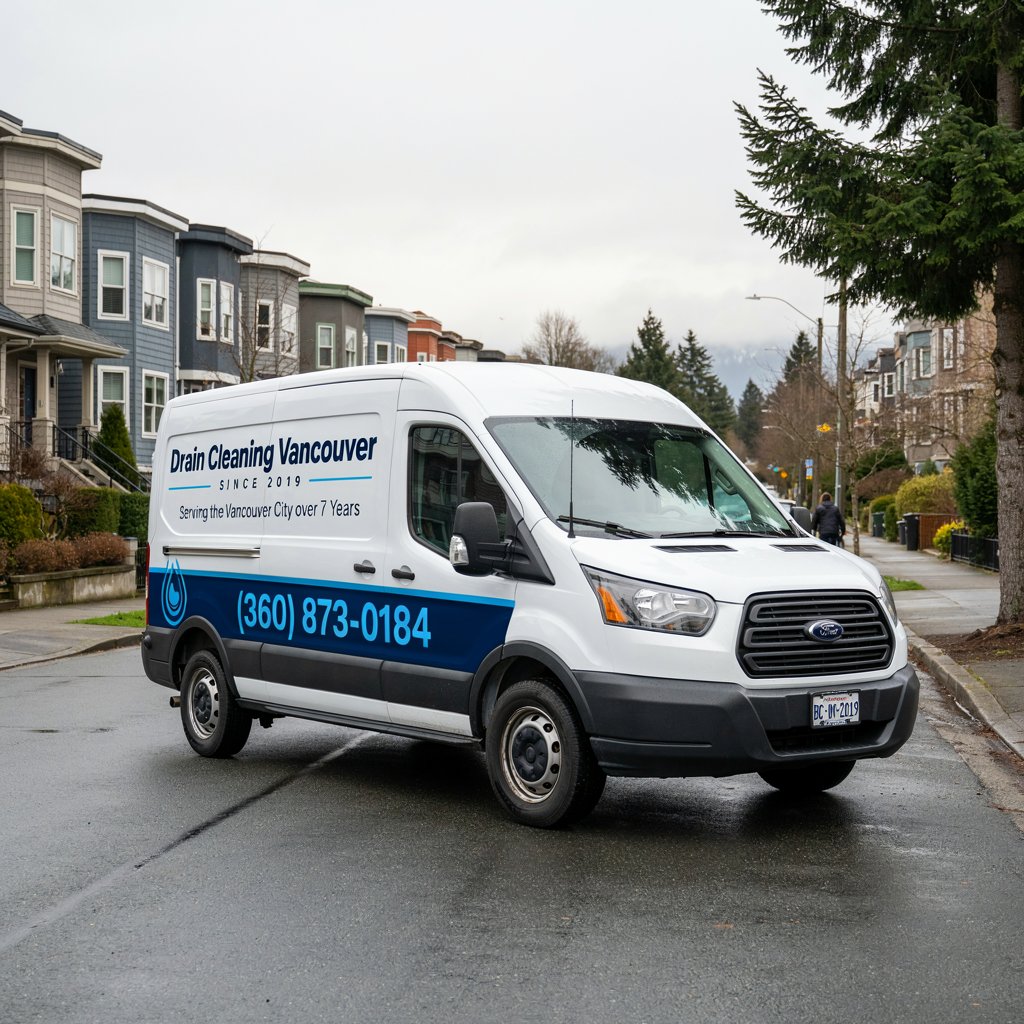
Root Removal in Vancouver, WA
A backup that gets worse after every rain, or a main line that clogs again a few months after cabling, is the classic signature of root intrusion. We clear it with mechanical cutting or hydro jetting, confirmed with a camera before and after, so you know the line is actually open and not just working around the growth.
Why Sewer Lines Attract Roots in the First Place
A tree root doesn't grow toward a pipe because it senses one. It grows toward moisture and nutrients, and a sewer line leaking even a small amount through a hairline crack or a slightly separated joint is exactly the kind of moisture source roots are built to find. Once a root reaches that opening, it doesn't stop. It thickens, branches, and spreads into a mat that catches paper, wipes, and grease on its way through, turning a small entry point into a full blockage over a year or two.
Mature landscaping is the biggest factor in whether this happens to a given property. Vancouver's older neighborhoods, Hazel Dell and Bagley Downs especially, were planted with fast-growing shade trees decades ago, Douglas firs and bigleaf maples that now have root systems extending well past the edge of the yard. Combine that mature root reach with a clay tile or cast iron lateral old enough to have developed joint separation, and root intrusion becomes less a matter of if than when.
Removing roots means two separate things depending on how established the growth is: cutting a path through with a mechanical cutting head, or scouring the full pipe wall clean with a root-cutting hydro jetting attachment. Which one Vancouver's root removal experts use, and whether we recommend both, depends entirely on what the camera shows once we're actually looking at the line.
It also helps to understand why this problem tends to get worse quietly before it gets worse suddenly. Root hair inside a pipe doesn't just block water, it catches everything else moving through the line: wipes, grease, hair, food debris. That combination builds into a dense mat far faster than root growth alone would, which is why a sewer backup from roots often seems to appear out of nowhere even though the underlying intrusion had likely been developing for a year or more beforehand.
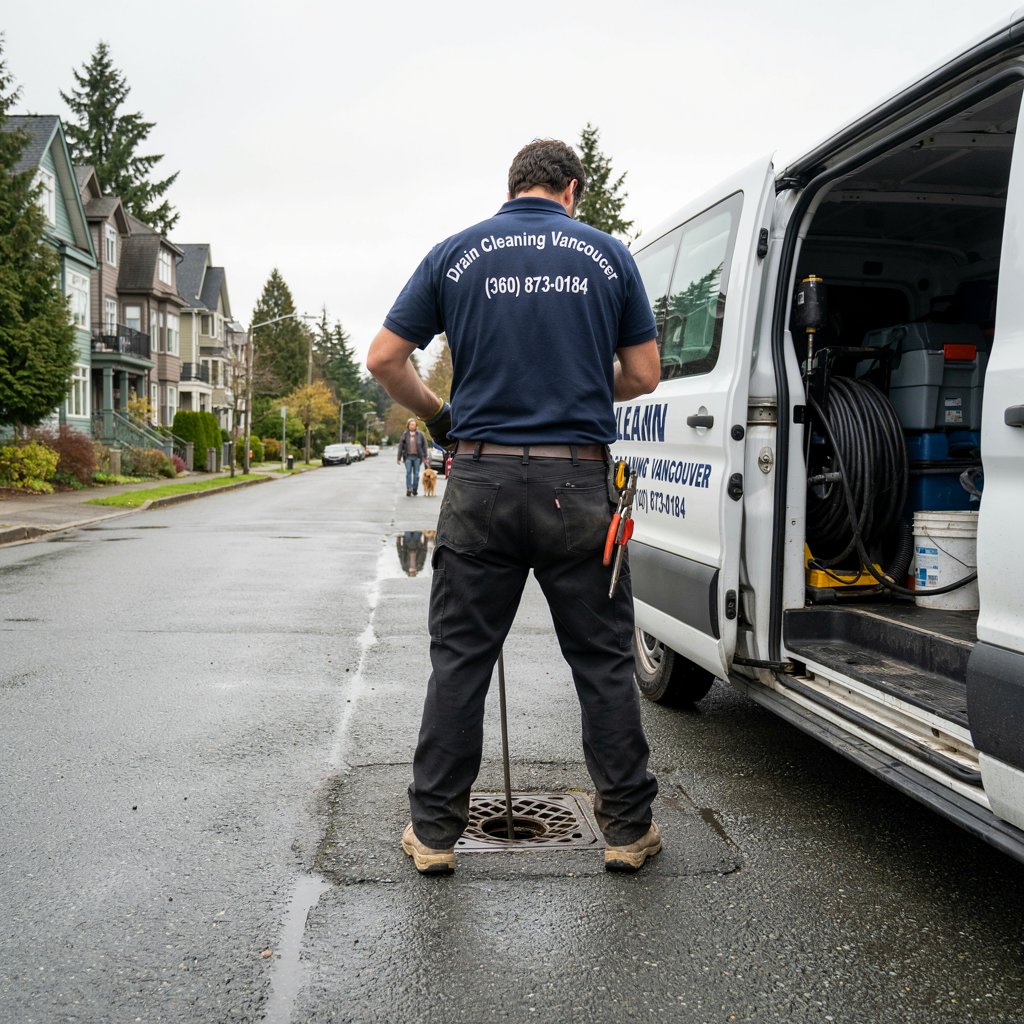
How to Spot Root Intrusion Early
Root intrusion has a few tells that separate it from an ordinary clog. Drainage that gets noticeably worse specifically after rain is one of the strongest signals, since saturated soil expands and puts more pressure through any opening roots have already found. A main line that clogs repeatedly despite regular cabling is another, since a cable clears a path through root growth without addressing the growth itself, so the same blockage returns on a predictable schedule.
An unusually green or lush strip of lawn running in a line across your yard is a sign worth taking seriously too. It usually means a sewer line underneath is leaking small amounts of nutrient-rich water, which is both feeding your grass and drawing in the roots causing the leak in the first place. Multiple slow or gurgling drains throughout the house, rather than just one, points toward the main line rather than an isolated fixture problem, which is also consistent with root intrusion further down the system.
Why Root Intrusion Is So Common Around Vancouver
Two things line up here in a way that keeps root removal a steady part of our work. The first is the tree canopy itself. Vancouver's older residential streets, particularly around Hazel Dell, Minnehaha, and Fourth Plain, were planted decades ago with large shade trees whose root systems have had fifty or more years to spread. A Douglas fir or bigleaf maple planted in 1955 has a root network that likely extends well past the property line by now, and a sewer lateral running anywhere within that radius is a candidate for intrusion.
The second is pipe age lining up with that same geography. Clay tile, the standard sewer material for homes built through the 1960s, uses short sections joined every few feet, and each joint is a potential entry point once the surrounding soil has shifted even slightly. Vancouver's clay-heavy upland soil expands and contracts with the seasons more than sandy or well-drained soil would, which accelerates that joint separation over time. Put fifty-year-old tree roots next to sixty-year-old clay pipe joints and root intrusion becomes one of the most common sewer line issues we diagnose in these neighborhoods.
How We Clear Root Intrusion
Camera Confirmation
We locate the root mass, assess how established it is, and check the pipe material and joint condition before choosing a method.
Mechanical Cutting or Jetting
Light growth gets cut mechanically for a fast fix. Established growth typically gets hydro jetted with a root-cutting nozzle for a more thorough clear.
Post-Clearing Camera Pass
We run the camera again to confirm the growth is actually cleared from the full circumference, not just from a narrow channel.
Long-Term Recommendation
If the entry point is a specific crack or joint, we tell you plainly whether a structural repair is worth considering to reduce regrowth.
What Root Removal Costs in Vancouver
Cost depends heavily on how established the root growth is and whether mechanical cutting alone is enough or full jetting is needed to actually clean the pipe wall.
| Service | Typical Price Range |
|---|---|
| Camera diagnosis with root locating | $160 to $250 |
| Mechanical root cutting | $235 to $455 |
| Cutting combined with full jetting | $405 to $710 |
Final pricing follows the camera inspection. How much of the pipe is affected and how thick the growth has become both change the scope of the job, so we confirm the number after we've actually seen it, not before.
What Makes Our Root Removal Different
Camera-Confirmed, Not Guessed
We see the growth before choosing a method and confirm it's actually cleared afterward, not assumed clear because water is flowing again.
Honest About the Tree
We won't tell you to remove a healthy tree. The crack or joint the roots found is the actual problem, and that's what we address.
Backed by a Real Guarantee
If the same section backs up again due to our workmanship within the guarantee period, we return and address it at no additional cost.
Root Removal Questions Vancouver Homeowners Ask
How do roots actually get inside a sewer line?
A root follows moisture and nutrients leaking from a hairline crack or a shifted pipe joint, and once it finds an opening, it grows through it and thickens over time. It doesn't need a large gap to start.
How can I tell if it's roots and not something else?
Drains that get noticeably worse after rain, a main line that clogs repeatedly despite cabling, or an unusually green patch of lawn over the sewer line all point toward roots. A camera inspection confirms it directly.
What does root removal cost in Vancouver?
Camera diagnosis with root locating runs $160 to $250. Mechanical cutting alone runs $235 to $455, and cutting combined with full jetting runs $405 to $710 depending on how established the growth is.
Is this a permanent fix?
Clearing the roots restores flow, but it doesn't repair the crack or joint separation that let them in, so regrowth is possible over time unless that underlying issue is also addressed with a structural repair.
Cutting or jetting, which actually works better on roots?
They solve different parts of the problem. Cutting clears the immediate blockage fast. Jetting with a root-cutting nozzle clears growth from the full pipe wall, which slows regrowth more effectively than cutting alone.
Will cutting out roots damage the pipe further?
Not when it's done with the right cutting head and matched to the pipe's condition, which is why we run a camera first to see what we're working with before cutting begins.
How often does this need to happen?
It depends on the tree, the crack size, and the pipe material. Some lines need attention every few years, others go a decade without recurrence once treated properly.
Can regrowth actually be prevented?
Not entirely without a structural repair, but a root-inhibiting foam treatment applied after clearing slows new growth significantly and is a reasonable middle step short of full pipe lining.
Do I have to remove the tree?
Almost never. The tree isn't the problem on its own. The crack or joint separation the roots found is. Removing the tree doesn't fix that, and the roots already in the pipe stay unless cleared.
Is the work guaranteed?
Yes. If the same section backs up again due to our workmanship within the guarantee period, we return and address it at no additional cost.
Should I be worried about roots if I have a newer PVC line?
Less worried, but not completely off the hook. PVC sections are longer with fewer joints, and the joints themselves seal more tightly than clay or cast iron, so intrusion is far less common. It's not impossible, though, particularly at the connection point where a newer line ties into an older municipal main, which is a spot worth checking if you're seeing symptoms despite having updated plumbing.
Roots Turning Into a Recurring Problem?
Call now and describe the pattern you're seeing. A camera look tells us exactly what we're dealing with, and we'll quote the fix before starting.
Browse Every Service by Property Type
Residential
- ✓ Clogged Drain Clearing
- ✓ Drain Snaking
- ✓ Hydro Jetting
- ✓ Video Camera Drain Inspection
- ✓ Root Removal
- ✓ Sewer Line Cleaning
- ✓ Bathroom Drain Cleaning
- ✓ Kitchen Drain Cleaning
- ✓ Toilet Drain Cleaning
- ✓ Laundry Drain Cleaning
- ✓ Basement Drain Cleaning
- ✓ Roof Drain Cleaning
- ✓ Downspout Drain Cleaning
- ✓ Preventative Drain Maintenance
- ✓ Emergency Drain Cleaning
- ✓ Drain Odor Diagnosis and Removal
- ✓ Slow Drain Diagnosis and Repair
- ✓ Vent Stack Cleaning
- ✓ Water Leak Detection
- ✓ Floor Drain Cleaning
Commercial
Where We're Based
Based at 609 NE Repass Rd in Vancouver, WA, clearing root intrusion across the surrounding area throughout the week.